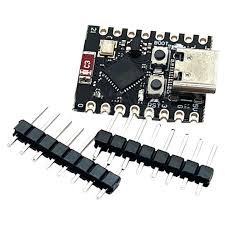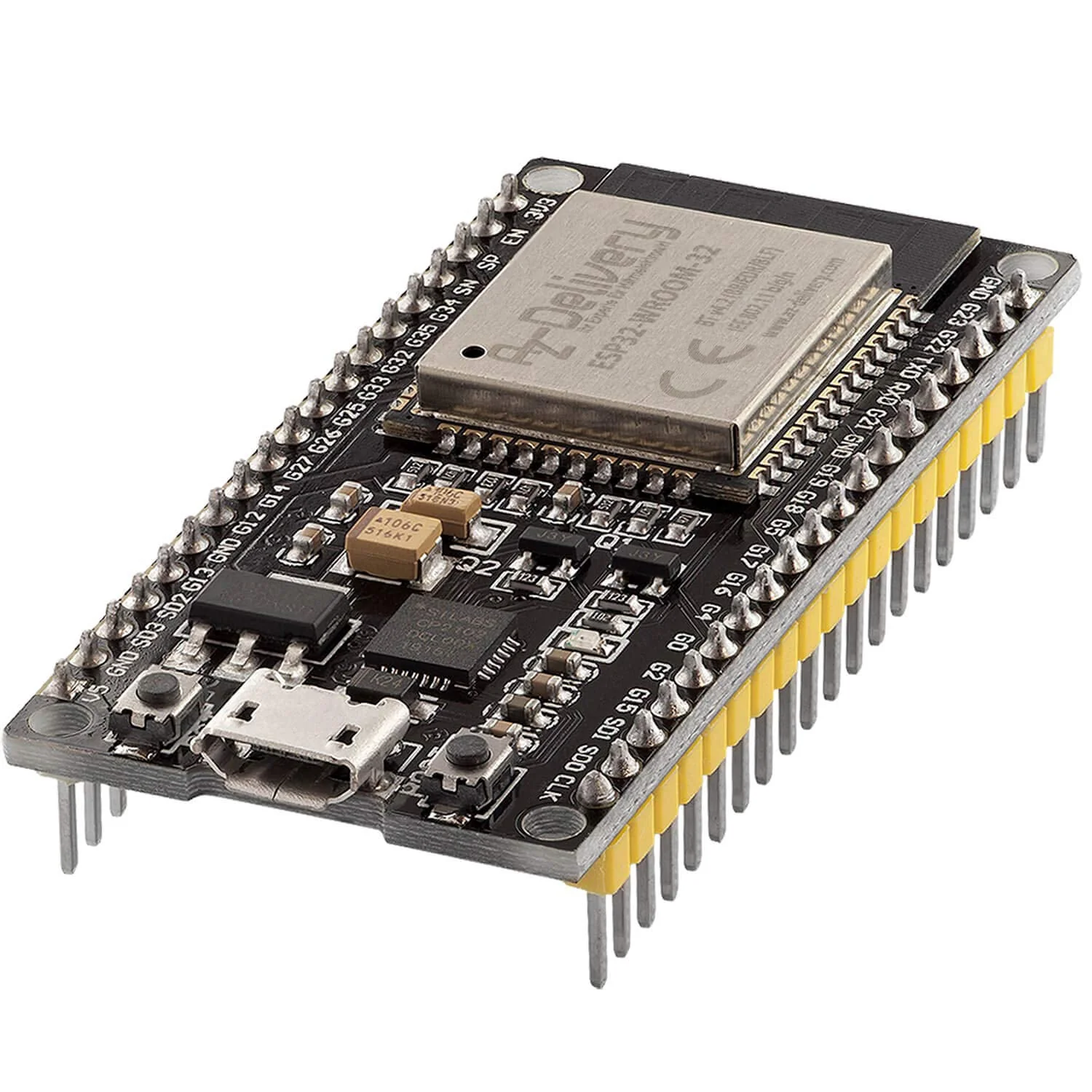
Esp 32
Ah, the ESP32 — now we’re talking one of the most versatile microcontrollers for IoT and DIY electronics 😎💡. If you want Wi-Fi, Bluetooth, and tons of GPIOs in a tiny package, the ESP32 is basically a Swiss Army knife for makers and engineers.
📦 ESP32 – Product Description
The ESP32 is a dual-core 32-bit microcontroller with Wi-Fi and Bluetooth (classic + BLE) built in.
It’s widely used in:
IoT devices
Home automation
Wearables
Sensor networks
Robotics
Smart appliances
Compared to older Arduino boards, the ESP32 offers:
High clock speed (up to 240 MHz)
Dual-core processing
More memory
Wi-Fi + Bluetooth built in
PWM, ADC, DAC, SPI, I²C, UART, CAN, touch sensors
✨ Key Features
✅ Dual-core Tensilica LX6 CPU, 160–240 MHz
✅ Integrated Wi-Fi 802.11 b/g/n
✅ Integrated Bluetooth 4.2 / BLE
✅ 320 kB RAM, up to 4 MB flash (depending on module)
✅ 34 programmable GPIOs (varies by module)
✅ 12-bit ADC ×18, 2× 8-bit DAC
✅ Touch sensor input ×10
✅ PWM outputs, SPI, I²C, UART, CAN, SDIO
✅ Deep sleep mode (~10 µA)
✅ Operating voltage: 3.3 V
📊 Electrical Specifications (typical)
Parameter Value
CPU Dual-core Tensilica LX6, 32-bit
Clock speed 160–240 MHz
RAM 320 kB SRAM
Flash Up to 4 MB
Wi-Fi 802.11 b/g/n, STA + AP mode
Bluetooth v4.2 / BLE
GPIO 34 (varies by module)
ADC 12-bit, up to 18 channels
DAC 8-bit, 2 channels
I²C / SPI / UART Multiple buses
PWM Up to 16 channels
Operating voltage 3.0–3.6 V (3.3 V typical)
Peak current ~500 mA Wi-Fi TX
Sleep current ~10 µA (deep sleep)
Temperature range -40 °C – 85 °C
🔌 Pin Configuration (Common ESP32 Dev Board)
GPIO pins: Digital I/O for sensors, LEDs, relays, PWM
ADC pins: Analog input
DAC pins: Analog output
UART / SPI / I²C: Communication with sensors/modules
3.3 V / GND: Power supply
EN (reset): Active-high reset
BOOT/IO0: For flashing firmware
Exact pinout depends on module (ESP32-WROOM-32, ESP32-WROVER, DevKit V1, etc.)
⚙️ How It Works
Write firmware/code in Arduino IDE, MicroPython, or ESP-IDF
Upload via USB (DevKit) or OTA (over-the-air)
Microcontroller runs Wi-Fi, Bluetooth, sensors, and actuators
Supports deep sleep, timers, interrupts, PWM, ADC/DAC, I²C, SPI, UART
Can serve web pages, MQTT clients, Bluetooth apps, and more
🛠️ Common Applications
IoT sensors and devices
Smart home systems (lights, doors, HVAC)
Wearables / health monitoring
Remote data loggers
Wi-Fi / Bluetooth gadgets
Robotics and drones
Web servers or API endpoints
💡 Design Tips
✅ Power supply
ESP32 is 3.3 V logic, peaks up to 500 mA during Wi-Fi TX → use a stable 3.3 V regulator or DevKit board.
✅ Flashing
Use USB-UART interface on DevKit boards, or OTA for deployed projects.
✅ GPIO caution
Not all pins are safe for input at boot — check strapping pins.
✅ Libraries
Use Arduino core for ESP32 or MicroPython — lots of ready-to-use libraries for Wi-Fi, Bluetooth, and sensors.
✅ Sleep modes
Deep sleep mode can drastically reduce power for battery-powered IoT devices (~10 µA).
✅ Quick Summary
ESP32 = powerful dual-core microcontroller with Wi-Fi & Bluetooth
Perfect when you want:
✔ Wireless IoT devices
✔ Sensor + actuator control
✔ Low-power operation with deep sleep
✔ Web, cloud, or Bluetooth connectivity
No specifications available.
0.0
Based on 0 reviews
No reviews yet. Be the first to review this product!
Login to write a review.